Need roof repair help in Haverhill?
Ready to talk roofing? Request a callback to check provider availability, or send a request and a local provider in our network will follow up.
No obligation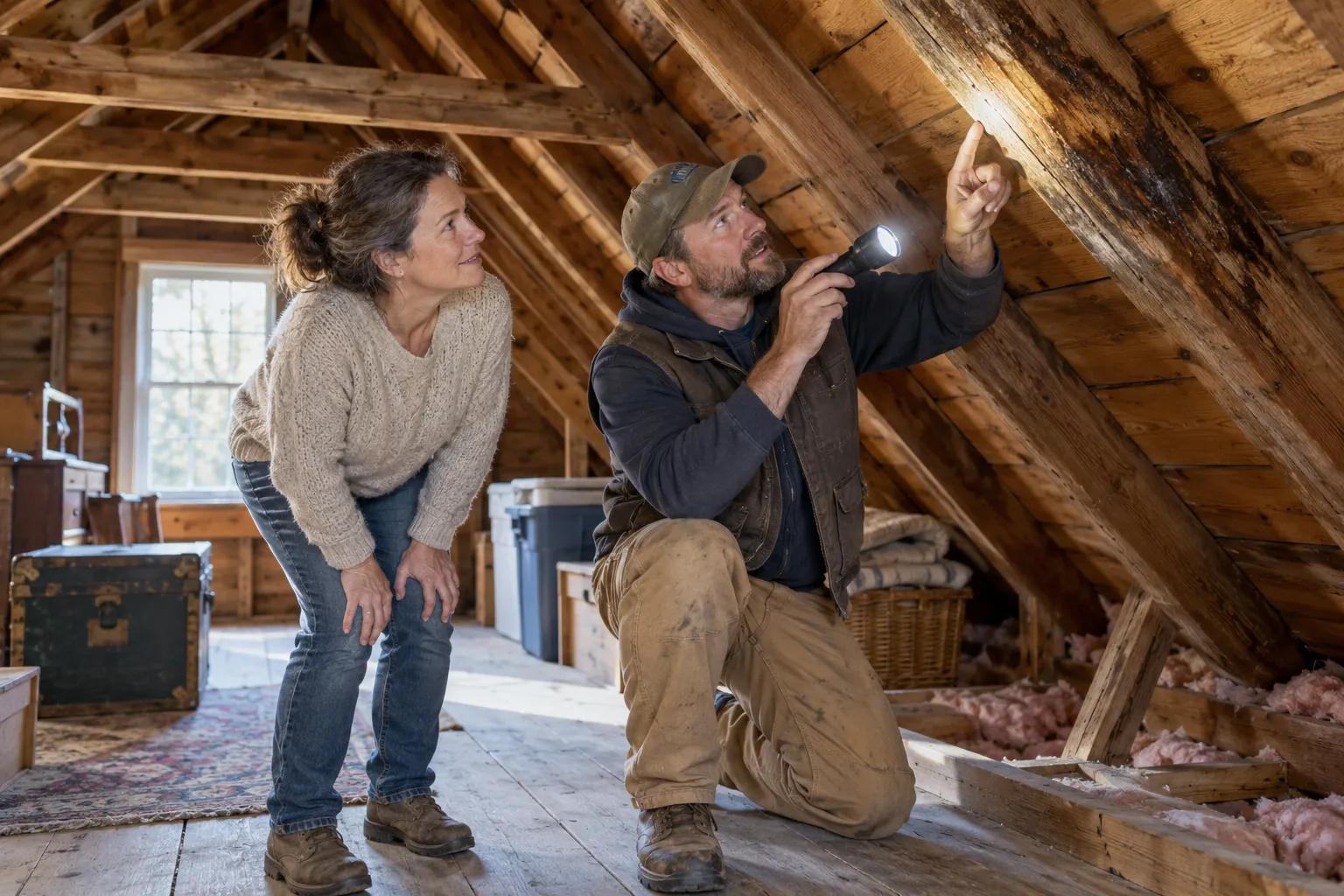
A roof problem rarely stays small. A drip, a lifted shingle or a damp attic spot can spread into decking, insulation and ceilings. This page gives you a clear order of steps, so you know what to do first and what to leave alone.
Challengefreedom Roofing is a referral service. It does not do roof work. It connects you with independent local roofing providers in the Haverhill area, and the provider you speak with does the inspection, the repair and the written quote. Use the checklist below, take a few photos, then reach out while the problem is still small. If the roof turns out to be worn out, a provider can also walk you through a replacement estimate.
Small problem first. Work through these steps in order.
Request a callback to check provider availability. Many providers can respond quickly to a roof that is actively leaking.
Some signs need a faster look than others. Put these at the top of your list:
A slow stain on a ceiling is still worth a call. It just has a little more room on the calendar.
Water finds a weak spot and keeps using it. Here is the usual chain:
1. Water gets past a cracked seal or lifted shingle. 2. The roof deck underneath soaks up moisture. 3. Insulation gets wet and stops doing its job. 4. Mold and rot start in the framing.
Older homes often have attics with decades of wear. Water can travel along a rafter and show up as a stain far from the real leak.
Cold, snowy winters are hard on roofs. Ice builds up at the eaves, melts, and then turns back to ice. Water can back up under shingles. Spring snowmelt then finds every gap. Coastal storms add wind that lifts edges and tears loose flashing.
Cape Cod style homes have dormers and valleys. Multi-family buildings often have low-slope sections. Both have extra places for water to sneak in.
Most repairs fall into a short list. A provider may suggest one or more of these:
A homeowner can help in a few safe ways, all from the ground or indoors.
Professional equipment, harnesses and know-how matter here. Falls are a real risk.
Keep it simple and stay inside.
A tarp on the roof is a job for a provider. It needs the right setup and safe footing.
The stain is rarely right under the hole. A provider usually works in this order:
1. Check the attic for wet wood and trails of water. 2. Follow the trail uphill. 3. Inspect flashing, vents and valleys. 4. Test with water if the source is still unclear.
This is why a quick guess from the ground often misses.
A repair makes sense when damage is limited and the rest of the roof is sound. Replacement is worth a quote when you see these signs:
Challengefreedom Roofing focuses on connecting homeowners with providers for new installs and replacement. A provider can tell you which path fits your roof.
Each material fails in its own way.
Ask the provider what they have worked with before.
Use this short list when you compare local roofing contractors:
Some policies may cover sudden damage. Check your policy and ask your insurer. Providers can often help document damage for a claim, so keep your photos and notes ready.
Sort, connect, quote. Take your photos, note the symptoms, and reach out while the problem is small.
A local provider looks at the ceiling, attic and roof surface to trace where the water gets in.
Providers can reseal or replace worn flashing at chimneys, vents and walls.
Cracked, curled or missing shingles can be replaced by a provider, with the nearby area checked too.
You get a written quote that names the work, the materials and the price, so you can compare before deciding.
Prices change by roof size, pitch, material and how much is damaged. These are typical U.S. ranges only. Costs in your area may be higher or lower, so always ask for a written quote before work starts.
| Repair item | Typical range | Notes |
|---|---|---|
| Replace a few shingles | $150 – $500 | Depends on roof pitch and access |
| Flashing repair | $200 – $800 | Chimneys and walls take longer |
| Pipe boot or vent seal | $150 – $450 | Common leak spot on older roofs |
| Valley repair | $400 – $1,500 | Two slopes meet, so more labor |
| Skylight leak repair | $250 – $1,200 | Seal or flashing rework |
| Larger section repair | $1,000 – $3,000 | May be near the point of replacement |
Look from the ground and the attic. Take dated photos of stains, damp spots and visible roof damage.
Request a callback or send the request form so we can connect you with a local provider in the network.
The provider checks the source of the leak and explains what the roof needs.
Read the written quote, compare options and choose the repair or replacement plan that fits.
One short path to an independent local provider, so you spend less time hunting through listings and more time getting a look.
A simple checklist helps you gather the facts before you reach out.
Reaching a provider early can keep a minor leak from turning into a bigger repair.
Independent providers handle the roof work, so you stay safely on the ground.
Ready to talk roofing? Request a callback to check provider availability, or send a request and a local provider in our network will follow up.
No obligationStay off the roof and keep people safe. Set a bucket under the drip, move belongings away, and take photos of the ceiling and roof. Then contact a local roofing provider to look at the source of the leak.
You can help with safe jobs like catching drips, checking the attic and taking photos. Roof work itself is risky and needs proper gear, so leave it to a provider who can trace and fix the leak.
Some policies may cover sudden damage, such as from a storm. Wear and age are often excluded. Check your policy and ask your insurer. Providers can often help document damage for a claim.
Ready to talk roofing? Request a callback to check provider availability, or send a request and a local provider in our network will follow up.
No obligation